


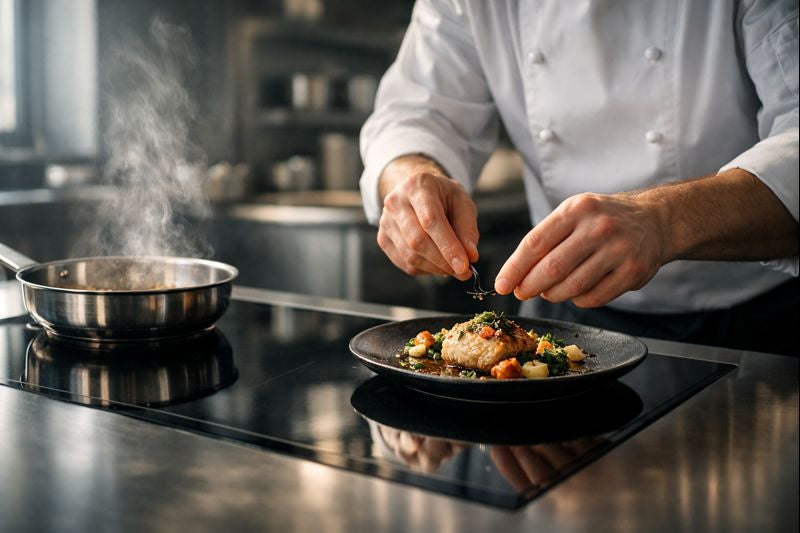
Why chefs are switching from gas to induction
For a long time, gas was the default in pro kitchens for one reason: it felt like control. Flame size looked like heat, and cooks learned to read it. But induction has quietly flipped the script—because it offers more control, less heat waste, and a cleaner, safer kitchen without giving up performance.
What’s changing isn’t just technology. It’s the job of cooking: faster tickets, tighter margins, hotter kitchens, higher ventilation costs, stricter building codes, and rising expectations for air quality and sustainability. Induction happens to solve many of those at once.
1) Precision and repeatability beat “feel the flame”
Chefs don’t just want “hot”—they want consistent outcomes across stations, shifts, and staff. Induction’s power delivery is highly controllable, and because it heats the pan directly, it responds quickly to adjustments. That makes it easier to hit the same simmer, the same sear, the same sauce reduction—over and over.
In restaurant operations, repeatability is money: fewer remakes, fewer overcooked proteins, more predictable timing. That’s why induction has expanded in commercial kitchens, not only as a niche “green” choice but as a performance tool.
2) Speed matters—and induction is simply fast
Induction transfers energy into cookware efficiently, so you get rapid heat-up and strong “recovery” after you drop food into a pan. That’s a practical advantage on a busy line: quicker boil times, faster pan preheat, less waiting for heat to come back.
The U.S. Department of Energy summarizes this efficiency advantage succinctly: induction can be up to three times more efficient than gas (and slightly more efficient than standard electric). Efficiency here isn’t just “green”—it’s speed and responsiveness in real cooking.
3) Cooler kitchens, happier crews, lower HVAC load
Gas is not just heat into the pan—it’s heat into the room. That matters in a professional environment where every degree affects comfort, safety, and stamina.
Induction reduces ambient heat because the cooktop surface is largely heated by contact with the hot pan (not by a constant flame). In practice, kitchens can feel less punishing, and ventilation/AC doesn’t have to fight as hard to maintain a workable environment—especially in smaller or hoodless / alternative-ventilation concepts that are starting to appear.
4) Air quality is becoming a frontline issue
The conversation has shifted from “gas is traditional” to “what does combustion do to indoor air?”
A 2025 Stanford-led analysis published in PNAS Nexus estimates that gas and propane stoves contribute substantially to nitrogen dioxide (NO₂) exposure for people who cook with them, with exposure rising sharply for heavier users.
And broader scientific literature has linked gas cooking emissions (including NO₂) with respiratory outcomes like asthma/wheeze risk in children (evidence base includes meta-analyses and reviews).
For chefs and restaurant owners, the point isn’t just the data—it’s operations: fewer combustion byproducts in the kitchen, a cleaner working environment, and an easier story to tell customers who care about health and air.
5) Safety and cleanup are operational advantages, not “nice-to-haves”
In a professional setting, fewer open flames can mean fewer burn risks and fewer flare-ups. Induction surfaces are also easier to wipe down fast between pushes because there’s no grate system and less baked-on residue.
Restaurant operators increasingly frame induction as safer and easier to sanitize—especially as labor constraints push kitchens toward equipment that reduces friction.
6) The proof is in who’s adopting it
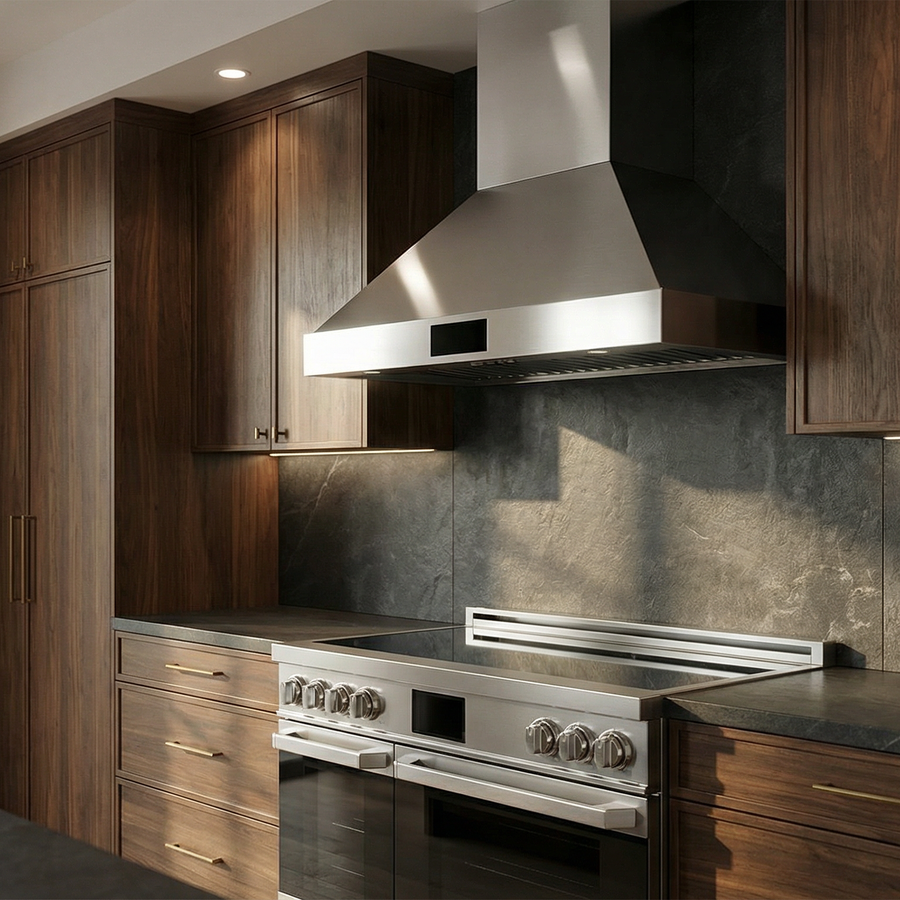
Induction isn’t just for home cooks anymore. It’s showing up in real restaurants (including high-end) as part of broader electrification and ventilation shifts. Reporting has highlighted all-electric/induction-forward restaurant setups and the operational thinking behind them.
Food media has also captured notable chef enthusiasm for induction at home and in professional contexts, emphasizing the “cleaner, cooler, more controllable” experience that aligns with modern kitchen goals.